Ajaran Bapak-Bapak Gereja
by ADMIN ·
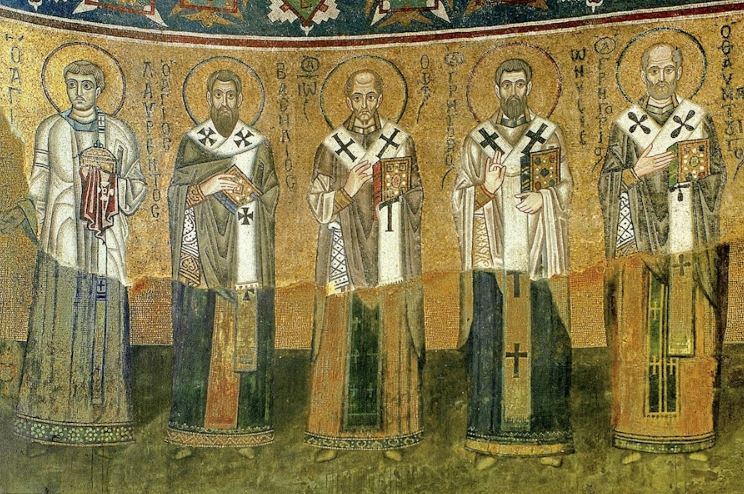
Image dari https://renovare.org/
Pertanyaan:
Banyak dari konsep teologia berakar dari pemikiran bapa-bapa atau konvesi gereja di zaman awal (apostolic creed hasil dari Council of Nicea, pemikiran Santo Thomas Aquinas, dst) dan yang kemudian berlanjut dengan konsep-konsep cetusan teolog-teolog ternama seperti Martin Luther dst. Pertanyaan saya adalah, bagaimana kita tahu bahwa ajaran-ajaran dan buah-buah pikiran teolog ini benar sesuai kehendak Tuhan? Dan jika benar bahwa di tradisi Kekristenan bisa ditelusuri ke ajaran rasul-rasul, bagaimana kita bisa yakin bahwa tidak ada "pencemaran" terhadap ajaran-ajaran yang diwariskan ini?
Jawaban:
Question:
Many theological concepts are rooted in the thinking of the Church Fathers or church councils in the early period (the Apostles’ Creed as a result of the Council of Nicaea, the thought of Saint Thomas Aquinas, etc.), and later continued through concepts articulated by well-known theologians such as Martin Luther and others. My question is: how do we know that the teachings and intellectual fruits of these theologians are truly in accordance with God’s will? And if it is true that Christian tradition can be traced back to the teachings of the apostles, how can we be sure that there has been no “contamination” of the teachings that have been handed down?
Answer:
Every theological concept and line of thought from the Church Fathers and Christians throughout history is the result of their struggle with the Word of God within their historical and social contexts. We can know that their teachings and ideas are in accordance with God’s will by evaluating those teachings and ideas against the Word of God, while also learning about the context of their lives. Furthermore, we can also trace the background of a particular teaching.
For example, in Institutes, Calvin stated that the Pope is the Antichrist who holds power in the Temple of God (Institutes, Book 4, Chapter 7.25), a view likely based on 2 Thessalonians 2:4. This line of thinking was carried on, for instance, in the 1689 Baptist Confession of Faith, Chapter 26.4. One of Calvin’s main objections, and that of his successors, to the position of the Pope as head of the universal church was their conviction that only Christ is the sole head of the church (Colossians 1:18). Can we make the same evaluation of the Pope today?
In the era of the early church, when heretical teachings existed, believers relied on church leaders to teach what was true. Church leaders consistently sought to bring all teachings back to the universal teaching of the church that had been handed down from the apostles. Just as the apostles Paul and Barnabas discussed matters in Jerusalem because church leaders were gathered there (Acts 15), the church in Rome—which according to church tradition was led by the apostle Peter—became a place where the teachings of the apostles were passed down (see, for example, Irenaeus, Against Heresies, Book 3, Chapter 3.1, from the 3rd century). In the early church period, the term pope (pope/papa) was actually used quite broadly for church leaders, before it began to be used exclusively for the leader of the church in Rome in the 6th century, and was formally regarded as the head of the universal church in the 11th century, although this was not recognized by the Eastern Orthodox Church. Five centuries later, we see Calvin living in a world in which corruption and abuse of power had become increasingly visible within the Roman Catholic Church led by the Pope in Rome, who used the title exclusively and was regarded as the head of the universal church.
Five centuries after Calvin, today, the Pope is still regarded as the head of the universal church by Roman Catholics, but is not recognized as such by many other denominations. Furthermore, despite human imperfection, for example Pope Francis and Pope Leo today do not appear to abuse their power, and even express positive things as followers of Christ. Thus, within my limitations, although I also disagree with the use of the papal office as head of the universal church, I also see it as inappropriate to say that today’s Pope is the Antichrist. Second Thessalonians 2:7 states that lawlessness is already at work secretly until the lawless one (the Antichrist) reveals himself. This verse encourages Christians to remain vigilant at all times by building their lives close to Christ, rather than speculating about who the lawless one is.
How can we be confident that the teaching we receive has not been corrupted? By believing that God desires us to know Him truly and that He will continually preserve the teaching of His people. Our responsibility as believers is similar to what I stated at the beginning: take the opportunity to study God’s Word, and examine and trace the historical and social background or context of church teachings.
Most of us will not have a great deal of time to study and conduct research. Therefore, do not hesitate to take opportunities to ask questions and discuss with fellow believers, especially friends at GPBB, whether through sermons or materials in small groups. Church workers can also be a resource to whom we may ask questions and whom we may question, so that together we may learn the teaching handed down from the prophets and the apostles. Ask the Pastor is also a good means to check teachings that we are questioning. I hope this answer helps your thinking. (VL)