Which church is right?
by ADMIN ·
Pertanyaan:
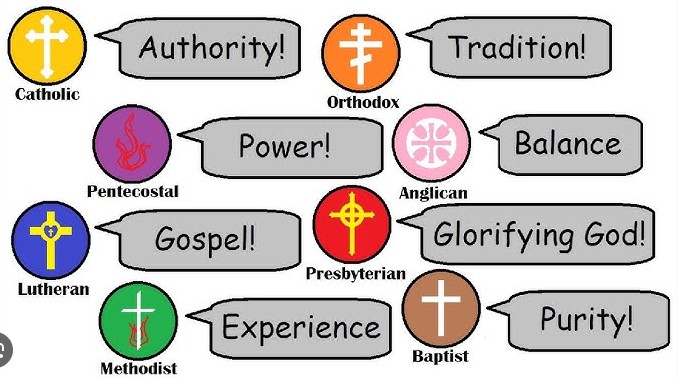
Beberapa tahun terakhir ini saya sempat tertarik dengan gereja Eastern Orthodox dan gereja Katolik. Saya ingin tanya, bagaimana kita tahu bahwa gereja Protestan adalah gereja yang "benar", bukan gereja-gereja aliran lain seperti Katolik, Ortodoks, dsb?
Jawaban:
-
Kis 17:10-12 - Jemaat Berea dikatakan menyelidiki kitab suci untuk mengetahui apakah pengajaran Paulus sesuai dengan Alkitab Perjanjian Lama. Kebiasan jemaat ini menjadi teladan bagi kita hari ini untuk punyai kebiasaan kembali kepada Alkitab.
-
Ul 29:29 - Ada hal-hal yang Tuhan tidak nyatakan dengan jelas kepada manusia. Dengan iman kita meyakini bahwa hal-hal tersebut mungkin memang tidak perlu kita ketahui, misalnya doktrin tentang cara baptisan. Secara arti kata literal dalam bahasa Yunani, kata ini dapat dimengerti sebagai pembenaman (lihat 2 Kgs 5:14 LXX), namun dapat juga dimengerti mencuci untuk membersihkan (lihat Mar 7:34, Luk 11:38). Dalam perdebatan yang ada antar gereja mengenai cara baptisan, sepertinya Alkitab tidak memberikan bagaimana baptisan seharusnya dilakukan. Kasus Kornelius dalam Kis 10:47-48 dapat menjadi bahan pemikiran apakah baptisan disini dilakukan dengan pembenaman (immersion) atau penuangan (pouring). Ada mindset mau belajar, tetapi menerima bahwa ada hal-hal yang akan tetap tersembungi untuk kita dapat menyimpulkan dengan pasti. Namun tetap diingat bahwa untuk hal-hal yang dinyatakan dengan pasti misalnya keselamatan hanya ada di dalam Kristus (Yoh 14:6; Kis 4:12) harus dipegang setiap orang Krsiten.
-
Sekalipun ada hal-hal yang tidak jelas, ada dokumen-dokumen sejarah yang dapat kita baca untuk mendapatkan pengertian lebih dalam. Dokumen-dokumen ini tidak boleh disejajarkan dengan Alkitab, tetapi dapat memberikan pengertian lebih luas tentang konsep tertentu. Berkaitan dengan cara baptisan misalnya, dalam pelaksanaannya di gereja mula-mula ada catatan dalam dokumen dari abad 2, Didache Bab 7 bahwa pembenaman harus dilakukan dalam air yang mengalir (living water). Dalam dokumen yang sama, juga dikatakan apabila hal ini tidak memungkinkan, baptisan dilakukan dengan menuang air 3 kali ke atas kepala. Melalui dokumen ini, kita mendapatkan masukan bagaimana gereja melakukan baptisan, sehingga pengetahuan ini dapat menjadi batasan praktis, misalnya, baptisan harus memakai air bersih, bukan dengan air kembang tujuh rupa.
Question:
Over the past few years, I have become interested in the Eastern Orthodox Church and the Catholic Church. I would like to ask: how do we know that the Protestant Church is the "true" church, rather than other traditions such as the Catholic Church, the Orthodox Church, and so on?
Answer:
One of the main pillars of the Reformation, which gave rise to the Protestant Church, is Sola Scriptura, which literally means "Scripture alone." This principle emphasizes that the Christian faith is founded upon the teachings of the Bible, which is the Word of God. Therefore, a more appropriate question would be: How do we know whether a particular teaching is based on Scripture? Such teachings may come from Protestants, Catholics, Orthodox Christians, or others.
How do we know whether a teaching is biblical?
- Acts 17:10–12 – The believers in Berea were commended because they examined the Scriptures to determine whether Paul's teaching agreed with the Old Testament Scriptures. Their practice serves as an example for us today, encouraging us always to return to the Bible.
- Deuteronomy 29:29 – There are things that God has not clearly revealed to humanity. By faith, we believe that these may simply be things we do not need to know. One example is the doctrine concerning the mode of baptism. Literally, the Greek word for "baptize" can be understood as immersion (see 2 Kings 5:14 in the Septuagint), but it can also mean washing for cleansing (see Mark 7:4 and Luke 11:38). In the debates among churches regarding the proper mode of baptism, the Bible does not appear to explicitly prescribe how baptism must be performed. The account of Cornelius in Acts 10:47–48 may prompt us to consider whether the baptism there was by immersion or by pouring. We should maintain a willingness to learn while also accepting that some matters will remain hidden and cannot be concluded with certainty. At the same time, we must firmly hold to the truths that Scripture clearly reveals, such as salvation being found only in Christ (John 14:6; Acts 4:12).
- Although some matters are not entirely clear, there are also historical documents that can help us gain a deeper understanding. These documents should never be regarded as equal to Scripture, but they can provide valuable historical insight into certain practices. For example, concerning baptism, the Didache, a second-century Christian document, states in Chapter 7 that baptism by immersion should be performed in living (running) water. The same document also states that if this is not possible, baptism may be performed by pouring water three times over the person's head. From this document, we gain insight into how the early church practiced baptism. Such historical knowledge can serve as a practical guideline—for example, that baptism should be performed using clean water, rather than water mixed with flowers or used in ritualistic practices.
Returning to the original question—which church is the most correct: Protestant, Catholic, or Orthodox?—we should go back to the primary principle: Which church most faithfully submits itself to the Bible (the Word of God) in its doctrine, traditions, Christian living, and other aspects? This is especially important given the reality that there are many Protestant denominations, some of which may even hold teachings that contradict God's Word.
May the principles above help answer this question. (VL)